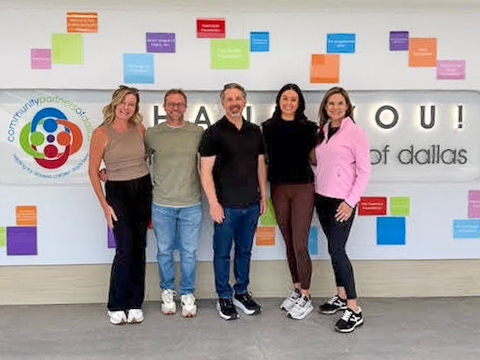
Audare Give Back Day with Community Partners of Dallas
The Audare team volunteered at Community Partners of Dallas, preparing school supplies and…

For many legacy families, this shift feels both inspiring and disruptive. Traditional charitable vehicles—foundations, donor‑advised funds, periodic grants—no longer satisfy rising stewards who view every dollar as a lever of change. Yet full‑balance‑sheet impact integration raises practical questions:
*How do we translate purpose into portfolio strategy?•
*How do we measure impact without losing sight of risk and return?•
How do we ensure alignment across generations and advisors?
Audare’s answer builds upon the same principle that guides our governance work: values before structures. Purpose is the north star; systems follow.
Succession is no longer a hand‑off—it is a redesign of what capital can achieve.
—Audare Leadership Team
A facilitated series of Impact Thesis Workshops• translates family values into concrete thematic pillars—e.g., educational access, regenerative agriculture, equitable health care. The output is a concise **Impact Policy Statement (IPS)• that sits alongside the traditional Investment Policy Statement.
Audare helps embed the IPS inside decision processes:
• Mission‑lock clauses within LLCs and trusts
• Voting thresholds for new allocations
• A next‑gen co‑chair seat on the investment committee
These guardrails ensure continuity while allowing each generation a meaningful voice.
Using a systematic due diligence framework we vet direct and fund opportunities across the capital spectrum:
Private Equity: Growth platforms solving systemic problems (e.g., circular materials)
Thematic Public Equities: Satellite sleeve tracking climate‑smart indexes
Catalytic Debt: Program‑related or revenue‑based financing for social enterprises
Impact performance is captured in our Stewardship Dashboard—aligned to frameworks such as IRIS+ and UN SDGs—updated quarterly. Financial returns are benchmarked against conventional indexes to maintain fiduciary rigor.
Academic meta‑studies—from Oxford‑Arabesque to GIIN—report neutral to slightly positive performance differentials for impact strategies. Our own composite portfolio analysis (2019‑2023) confirms that families can *achieve competitive, market‑rate returns• while advancing mission objectives.
Beyond pure performance, disciplined impact integration mitigates long‑tail risks: climate regulation, social license to operate, and talent attraction all influence enterprise value.
*Pull Quote – Right‑Aligned•
“Impact isn’t a concession. It’s an additional lens on risk.”
| Concern | Audare Response |
|---|---|
| **“Impact violates fiduciary duty.”*• | The IPS ties every mandate to measurable, financially material factors; risk committees review variance just as they do for any satellite strategy. |
| **“Data is unreliable.”*• | We triangulate third‑party verification (SVT, ISS ESG) with direct KPIs and require annual assurance statements. |
| **“Family members disagree on priorities.”*• | Structured governance (mission lock, voting thresholds) keeps debates objective and time‑bound. |
| Phase | Timeline | Key Actions | Outcome |
|---|---|---|---|
| *Diagnostic• | Q1 | Purpose workshops, IPS drafted | 3 thematic pillars ratified |
| *Deployment• | Q2–Q3 | $40 M in private‑credit fund; $15 M carve‑out to public thematic ETF | Portfolio beta +0.92; carbon intensity ‑38 % |
| *Stewardship• | Ongoing | Quarterly impact dashboard; annual family retreat review | Next‑gen heirs now co‑author 2025 allocation plan |
(Financial data rounded for confidentiality.)
Ready to benchmark your current portfolio against Audare’s Impact Readiness Framework? *Download our Impact Policy Statement Template• and schedule a 30‑minute discovery session.
Share this article: