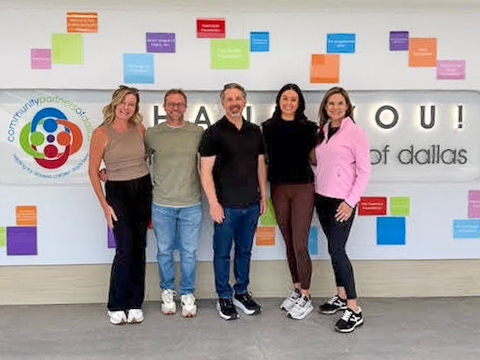
Audare Give Back Day with Community Partners of Dallas
The Audare team volunteered at Community Partners of Dallas, preparing school supplies and…


American charitable giving has exploded since 1980, growing from $55 billion to $485 billion annually. That’s a 300% increase. Meanwhile, specialized consulting firms have multiplied, and academic research centers dedicated to philanthropic effectiveness have flourished across universities.
Yet homelessness persists. Educational gaps continue widening. Environmental crises accelerate.
Despite this flood of good intentions and increasingly sophisticated strategy, most foundations rate their own impact as merely “moderate” between 4 and 7 on a 10-point scale. The uncomfortable truth? A century of strategic philanthropy has failed to create lasting change at the scale our challenges demand.
The problem isn’t lack of resources or good intentions. We’re still practicing charity in an age that requires systems change.
Walk through any major foundation’s portfolio and you’ll see the same pattern everywhere: funding individual organizations to deliver services, one beneficiary at a time. Schools get built. Hungry families get fed. Job training programs launch. Homeless shelters open their doors. Each intervention feels meaningful, and every success story inspires, yet the underlying systems producing these problems remain completely untouched.
This approach traces back to Andrew Carnegie’s paternalistic vision. It assumes that “the wealthy are wise because of their wealth and those in poverty are ignorant because of their poverty.” Philanthropists become the problem-solvers while communities become passive recipients. Researchers call this a “persistently paternalistic approach to philanthropy that endures to this day.”
The evidence against this model is overwhelming. Randomized controlled trials of unconditional cash transfers simply giving money directly to people consistently show “improvements in savings, nutrition, education, and mental health, as well as reductions in stress levels, child marriages, teenage pregnancy, and domestic violence.” When people have resources, they solve their own problems more effectively than well-meaning programs designed for them.
Yet the charity model persists because it feels intuitive. Funders see immediate outputs like students taught, meals served, and houses built, then mistake activity for impact. They fund solutions without questioning whether they’re solving the right problems or addressing root causes.
The foundations that create lasting change operate differently. Instead of just funding organizations, they build ecosystems. Rather than solving problems directly, they enable others to solve problems. They change the systems that determine who needs services in the first place.
Consider the Rockefeller Foundation’s approach to malaria reduction in Africa. Rather than simply funding bed nets or treatment programs, they invested in “all aspects of public health: ideas, theory, research, professional training, practice, implementation, organization and institution-building.” They operated “internationally until the founding of the WHO in 1948” and “helped to shape global public health to a greater extent than any other organization of its day.”
This systems-first approach created infrastructure that enabled thousands of other interventions. By building research capabilities, training institutions, and organizational frameworks, they established foundations for sustainable progress that individual programs could never achieve.
The pattern repeats across successful long-term philanthropic initiatives. The Ford Foundation’s work on civil rights created legal infrastructure, academic research centers, and policy networks that transformed American society. The Gates Foundation’s global health work focuses on building “health systems to become more resilient to potential future COVID-19 outbreaks and other public health threats” rather than just treating diseases.
Systems change requires capabilities no single foundation possesses. The most transformational philanthropic initiatives emerge from collaboration between unlikely partners, pooling resources, knowledge, and networks to achieve outcomes impossible for individual funders.
The END Fund illustrates this approach perfectly. Founded to eliminate neglected tropical diseases affecting over one billion people, it “grew from a conversation between a parasitologist and a venture capitalist” but required “pharmaceutical companies, on-the-ground health workers, Ministries of Health in its target countries, and a wide range of individual, institutional, and corporate funders.” Each partner contributes different capabilities toward a shared systems-level vision: scientific knowledge, policy influence, distribution networks, financial resources.
Similarly, Rockefeller Philanthropy Advisors’ SDG Philanthropy Platform demonstrates how collaborative infrastructure enables broader participation. By creating “a global facilitator, enabling effective collaboration between philanthropists, governments, the UN, businesses, and other civil society organizations,” they provide “country-specific information, find allies in a certain region, identify fitting entry points for grantmaking, learn from others’ experiences, and track progress easily.”
These platforms don’t solve problems directly. They create conditions for others to solve problems more effectively, multiplying impact across entire ecosystems.
Here’s something counterintuitive: foundations that create lasting change often achieve broader impact by narrowing their focus. Research consistently shows that “foundations with a tightly focused approach to their grantmaking reported higher impact,” while “several funders cited lack of focus as a reason for limited impact.”
This focus isn’t about choosing one cause over others. It’s about understanding leverage points within complex systems. The Searcy Family Foundation’s mission to “throw a pebble that creates a ripple” reflects this philosophy. Rather than trying to address every social problem, they identify specific interventions that catalyze broader change.
The ripple metaphor is instructive. A pebble thrown randomly into water creates small, isolated waves. But a pebble dropped at the right point where currents converge, where the ecosystem is primed for change generates expanding circles that reach far beyond the initial impact.
Systems-focused philanthropy requires this kind of precision. It means investing time in understanding root causes, identifying leverage points, and building interventions that enable other interventions. It’s less dramatic than directly providing services, but more transformational in its ultimate impact.
Traditional charity seeks silver bullets single interventions that solve complex problems. Systems philanthropy recognizes that complex problems require ecosystem solutions. No single organization, program, or innovation will end poverty, fix education, or solve climate change. But the right combination of interventions, supported by robust infrastructure and collaborative partnerships, can shift entire systems toward better outcomes.
This requires different metrics than traditional philanthropy. Instead of counting beneficiaries served or dollars distributed, systems funders measure ecosystem health. How many new organizations are entering the field? Are policy frameworks evolving in productive directions? Are communities developing capabilities to address their own challenges? Is the system becoming more responsive to emerging needs?
These changes often take decades to manifest, requiring patience and persistence that quarterly reporting cycles discourage. Yet the evidence is clear: foundations that think in systems create impact that compounds across generations, while those focused on immediate outputs see their effects dissipate when funding ends.
The transition from charity to systems change requires different skills and different mindsets than traditional philanthropy. Instead of evaluating individual proposals, funders must understand systems dynamics, identify leverage points, and design interventions that strengthen ecosystem capacity.
Systems philanthropists seek opportunities to build coalitions and partnerships that leverage multiple sources of expertise and resources rather than funding organizations in isolation. They prioritize interventions that create platforms, networks, and capabilities others can utilize rather than just delivering services directly.
Before making any grant, they map the system they’re trying to change, identifying where strategic pressure can catalyze broader transformation. They measure success across decades, not grant cycles, building relationships and capabilities that compound over time. Rather than designing solutions for communities, they invest in community capacity to identify and address their own priority challenges.
This approach is more complex than writing checks, but exponentially more powerful in its ultimate impact.
Every philanthropist faces a fundamental choice: provide temporary relief or create lasting change. Both have their place, but in an era of accelerating challenges and scarce resources, the bias toward systems change becomes not just strategic but moral.
Charity treats symptoms while systems philanthropy addresses root causes. Charity creates dependency while systems philanthropy builds capacity. Charity provides services while systems philanthropy changes the conditions that determine who needs services.
The transition requires courage. Systems change is messier than service delivery, harder to measure than outputs, and more difficult to communicate than success stories. But for families committed to legacy rather than just giving, it’s the difference between temporary ripples and permanent waves.
When you drop a pebble in still water, the ripples eventually fade. But when you shift the current that feeds the pond, every pebble every intervention, every innovation, every act of courage creates waves that grow stronger over time.
The question isn’t whether your philanthropy will create impact. It’s whether that impact will outlast your lifetime.
Share this article: