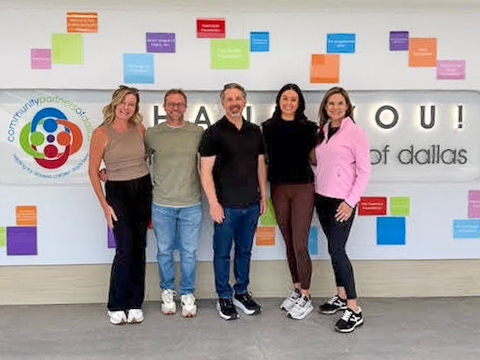
Audare Give Back Day with Community Partners of Dallas
The Audare team volunteered at Community Partners of Dallas, preparing school supplies and…


“Give me a lever long enough and a fulcrum on which to place it,” Archimedes supposedly declared, “and I shall move the world.” Twenty-three centuries later, impact investors have forgotten this fundamental truth about leverage. They’re trying to move mountains with teaspoons, pouring billions into single-point solutions while the world’s most pressing problems remain stubbornly intact.
The impact investing industry has become obsessed with what systems theorist Donella Meadows called “parameters.” The numbers, budgets, and metrics that feel concrete but rarely change behavior. Meanwhile, the real leverage points where modest interventions create disproportionate change remain largely untouched.
What if the secret to transformational impact isn’t finding bigger checks to write, but finding the right levers to pull?
Walk into any impact investing conference and you’ll hear the same story repeated endlessly: this technology will solve poverty, that startup will cure climate change, this social enterprise will transform education. MIT’s Alban Yau calls this the “single-asset paradigm.” The belief that individual companies or technologies can create structural societal change.
This thinking produces predictable failures. Acumen, one of impact investing’s pioneers, learned this lesson through painful experience. In the late 2000s, they watched “commercially-successful businesses fail that tried to pivot downmarket” to serve low-income communities. These companies simply “did not understand the customer nor how the offering needed to shift.” When their business models for poor communities became unviable, they abandoned those markets entirely, “leaving those in need of their services behind.”
Even more telling, Acumen found that investors repeatedly tried “to convert non-profits into for-profits, but struggled to build a business case where one did not exist.” The underlying assumption that changing the legal structure would automatically create sustainable impact proved disastrously wrong.
These failures share a common thread: they focused on the intervention rather than the system. They optimized individual assets rather than understanding the leverage points within complex social and economic networks.
Donella Meadows spent decades studying why some interventions create lasting change while others disappear without a trace. Her research revealed that most people intuitively know where leverage points exist, but “systematically use them backward, systematically worsening whatever problems we are trying to solve.”
Her hierarchy of intervention points, ranked from lowest to highest leverage, explains why impact investing so often disappoints.
Parameters have the lowest leverage. Changing numbers like funding amounts, interest rates, and target metrics. Meadows found that “probably 90, no 95, no 99 percent of our attention goes to parameters, but there’s not a lot of leverage in them.” They rarely change behavior or system outcomes.
Material structure has more leverage. Altering physical infrastructure and resource flows. This requires massive capital and time but can create meaningful change.
Information flows offer significant leverage. Changing who has access to what information when can create significant shifts in behavior patterns across entire networks.
Rules and governance provide high leverage. Modifying the formal and informal rules that govern system behavior. High leverage, but systems resist changing their rules.
Goals and purpose offer extremely high leverage. Shifting what the system is trying to achieve. A fishery driven by “catch as much as you can” behaves completely differently from one focused on “sustaining healthy fish stocks for the long term.”
Paradigms and mindsets provide the highest leverage. Changing the shared ideas and assumptions that create systems in the first place. The most powerful lever, but also the most difficult to move.
The most successful impact interventions work at the higher leverage points, often with surprisingly modest capital. Consider ReFED’s approach to food waste, a $1.5 trillion global problem that seemed intractable through traditional single-asset thinking.
Rather than funding another food waste startup, ReFED’s investors supported the creation of the Insights Engine, an open-source data platform that “empowered more than 60,000 users, including large food companies, state governments, and startups, to delve into nuanced solutions tailored to specific challenges.” By changing information flows rather than just funding technology, they created infrastructure that enabled thousands of other interventions.
The platform was developed by “consolidating and analyzing public and proprietary datasets and was supplemented with information from academic studies, industry papers, case studies, and industry expert interviews.” This systematic approach to changing information access has generated far more food waste reduction than any single company could achieve.
Similarly, the Tara Health Foundation’s approach to reproductive health demonstrates how shifting rules and governance creates leverage. Rather than funding individual healthcare providers, they “invited other investors to join a shareholder coalition. With over $500 billion in assets under management, this coalition has filed investor letters in 30 public companies to influence their internal health policies.” By changing corporate governance rules, they affected millions of employees across multiple companies.
Smart impact investors are beginning to adopt what could be called “systems-first thinking.” This approach starts with understanding leverage points before deploying capital. Rather than asking “What’s the best company to fund?” it asks “Where are the pressure points that could shift entire systems?”
This means beginning with leverage point analysis before evaluating any investment. Mapping the system you’re trying to change. Where are the key feedback loops? What rules or information flows currently prevent the outcome you want? Who holds the power to change those rules?
It means prioritizing interventions that enable other interventions. A platform that helps thousands of organizations is generally superior to funding one organization directly. A policy change that unlocks private capital is more powerful than deploying more capital yourself.
The goal becomes designing investments that change how other actors behave, not just how your investees behave. Catalyzing ecosystem-wide shifts rather than optimizing individual company performance.
It requires building portfolios of interventions that strengthen each other under stress. Economic uncertainty becomes opportunity for system transformation rather than a threat to individual investments.
Most importantly, it means measuring success across decades, not quarters. System-level change requires patience, but creates compounding returns that dwarf traditional investment metrics.
Here’s what’s counterintuitive about leverage: it often requires less capital, not more. Systems theorist Jay Forrester repeatedly found that companies already knew where their leverage points were. They were just “trying very hard to push them in the wrong direction.”
The same pattern appears in impact investing. Enormous capital pools chase parameter-level interventions like funding more schools, more clean energy projects, more microfinance institutions. Meanwhile, the high-leverage interventions changing information flows, shifting corporate governance, altering regulatory frameworks remain underfunded.
This creates extraordinary opportunities for investors who understand systems thinking. When Kroger launched an innovation fund advised by ReFED, they created a “valuable avenue for waste prevention technology startups to test their solutions in large corporate pilots.” The fund’s modest size generated disproportionate impact because it operated at a leverage point where startup technology could access corporate distribution networks.
The Archimedes Principle isn’t about finding silver bullets. It’s about understanding that every system has fulcrum points where applied pressure creates multiplicative effects. The most transformational impact investments don’t just solve problems; they create infrastructure for others to solve problems.
Consider the difference between funding a single scholarship program versus creating a platform that helps thousands of organizations design and manage their own scholarship programs. Both require capital, but one operates at a higher leverage point and creates exponentially greater impact.
This systems-first approach requires different skills and different metrics than traditional impact investing. Instead of measuring outputs like students served, trees planted, or loans disbursed, we measure ecosystem changes. New actors entering the space, policy shifts, behavior changes across organizations.
Impact investors face a fundamental choice: continue optimizing teaspoons to move mountains, or learn to identify and utilize the levers that exist within every complex system.
The stakes couldn’t be higher. Climate change, inequality, and technological disruption require interventions at systems scale, not company scale. The old model of funding more organizations to do more good simply cannot generate change at the speed and scale these challenges demand.
But for investors willing to think systemically, the opportunity is unprecedented. When you find the right fulcrum point and apply modest pressure with precision, you discover something remarkable: the world actually can be moved.
The question isn’t whether your capital can create impact. It’s whether you’re applying it at the point where impact becomes inevitable.
Share this article: